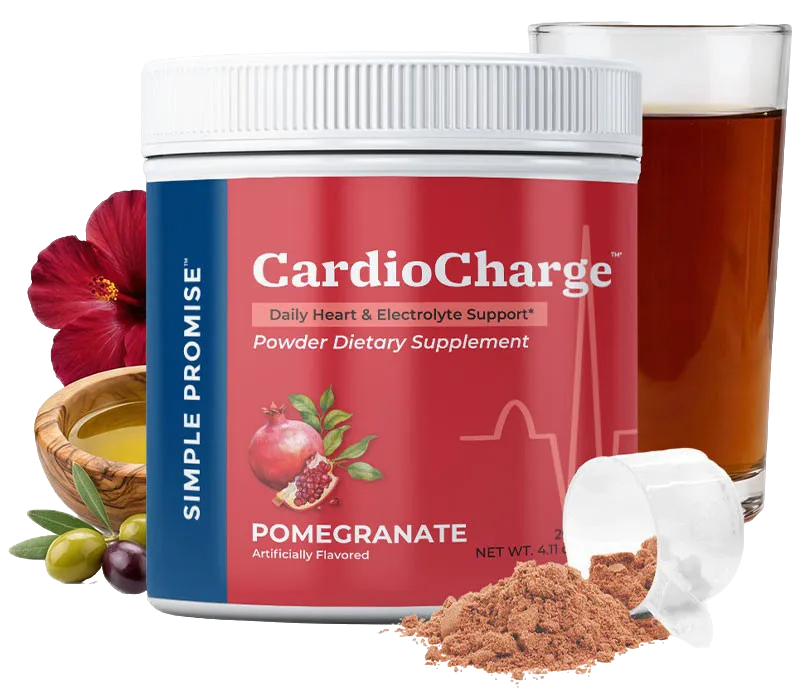
CardioCharge ingredients are the best place to start if you are weighing the product, because the formula is simple to read: seven actives, each with a stated amount. Here is what each one is, why it is there and how the pieces fit together. A table version lives on the CardioCharge ingredients page, and the home page has the pricing.
The Seven Ingredients at a Glance
Per serving, the label lists D-Ribose (3,000 mg), L-Glycine (1,000 mg), hibiscus flower extract 4:1 (470 mg), potassium as potassium citrate (380 mg), magnesium as magnesium glycinate (190 mg), sodium as sodium citrate (140 mg) and Hytolive® olive extract (30 mg). The tub is flavored pomegranate, with other ingredients printed on the label.
Energy Nutrition: D-Ribose
D-Ribose is a naturally occurring five-carbon sugar. It is part of the molecular structure of ATP, which cells use to move energy where it is needed. At 3,000 mg it is the highest-dose ingredient, so it anchors the product’s cellular-energy theme. Because it is a nutrient and not a stimulant, it works with the caffeine-free positioning instead of against it. See the D-Ribose entry.
Plant Extracts: Hibiscus and Hytolive®
Hibiscus flower extract (4:1), 470 mg
Hibiscus sabdariffa gives the formula its tart, deep-red flavor note and a supply of polyphenols such as anthocyanins. Researchers have studied hibiscus in relation to cardiovascular markers, including blood pressure. Those studies do not make CardioCharge a treatment, and anyone using blood pressure medication should speak with a clinician before adding hibiscus.
Hytolive® olive extract, 30 mg
Hytolive® is a branded extract of olive fruit rich in hydroxytyrosol. It is the smallest dose in the tub, but standardized extracts can carry their active compounds in small amounts, so low milligrams are not a sign of a filler. Read more in the Hytolive entry.
Electrolytes: Potassium, Magnesium and Sodium
These three minerals form the hydration backbone of the formula. Potassium (380 mg) and sodium (140 mg) are the classic electrolyte pair that regulates fluid balance and nerve signaling. Magnesium (190 mg), as magnesium glycinate, supports muscle and nerve function and the enzymes involved in energy metabolism.
Minerals deserve one extra note: their amounts count toward your daily total. People with kidney conditions or medical advice to limit potassium, magnesium or sodium should check with a professional before using the product. Our electrolyte article covers this in more depth.
Amino Acid Nutrition: L-Glycine
L-Glycine, at 1,000 mg, is the second-largest amount on the label. The body uses glycine to build proteins, including collagen, and to make other compounds. It pairs neatly with magnesium glycinate, in which magnesium is bound to glycine. Its inclusion rounds out the formula with an amino acid layer. See the L-Glycine entry.
How the Ingredients Work Together
Think of the formula as three overlapping layers. The mineral layer handles fluid balance and electrical signaling. The energy layer, D-Ribose with magnesium’s help, supports ATP-related nutrition. The plant and amino acid layer adds polyphenols and a protein building block.
That layered design is the reason CardioCharge is sold as a combination, but it also means no single ingredient explains the whole product. The how-it-works article follows the same logic from the body’s point of view.
What Is Not in the Formula
- No caffeine or stimulant ingredients.
- No sugar.
- No proprietary blend hiding amounts; each active is listed individually.
Questions to Ask Before You Buy
- Do I have kidney conditions, a restricted-potassium or sodium diet, or take medication that affects electrolytes?
- Am I comfortable with an artificially flavored pomegranate powder?
- Do I want a caffeine-free option?
If you answer yes to the first question, talk to your clinician. If the others fit, the next stops are the official overview and the review page, which weighs pros and considerations. You can also read our benefits article for a realistic take on what the formula supports.
Reading the Supplement Facts the Smart Way
When you compare CardioCharge with other products, look at three things. First, whether each ingredient has its own amount instead of being buried in a blend; here every one does. Second, which form of each mineral is used, because potassium citrate, sodium citrate and magnesium glycinate are different compounds from the oxides or chlorides found in many other products. Third, whether the dose makes sense for the stated purpose.
Amounts versus the label on your tub
Packaging can change over time, so treat the figures in this article as a summary and confirm them against the printed label on your tub. If something differs, the label wins. Our supplement facts summary and the label table on the home page show the same numbers.
It also helps to ask what is missing. There is no caffeine, no sugar and no proprietary blend. That does not make the product better for everyone, but it does make comparison easier.
Final Word on the CardioCharge Formula
CardioCharge’s ingredient list is easy to read, and its three-layer design is logical: electrolytes, energy nutrition and plant polyphenols with amino acid support. It remains a dietary supplement meant to complement healthy habits, not a treatment for any condition. Confirm all amounts against the label on your tub.
CardioCharge essentials: CardioCharge home page official overview reviews ingredient breakdown